
Ways to Heat your Granny Annexe
- Mobile Annexe
- 5 days ago
- 3 min read
Keeping warm doesn't have to be complicated. When you are looking at how you will want to heat your Mobile Annexe, there are lots of options available. Each one has its own benefits, depending on your space, budget, and lifestyle.
Below is a simple guide to some of the most popular ways to heat your home.
Electric Convection Heaters
They are excellent for garden annexes, as they heat the air quickly and can be free-standing or wall-mounted. Most are available with 24-hour timers and are thermostatically controlled, which is ideal for pre-warming an annexe before your day begins, switching themselves off if you get some nice sunshine, and preventing annexes from becoming too cold overnight. They are relatively cheap to buy and install, not requiring a separate energy source if you already have an electricity supply. A great option for those looking to keep the heating bills to a minimum.
Electric Radiators and Electric Oil-Filled Radiators
Electric radiators come in both traditional and contemporary designs. Similar to central heating radiators found in homes, they are mounted on the wall but use an electric element. While they heat up more slowly compared to convection heaters and provide slightly less precise temperature control, they can still be connected to thermostats and timers to preheat your garden annexe. The oil retains heat, maintaining warmth for longer after they are switched off, which again can be via a thermostat or timer. The breadth of choice and styling and colours is vast, but they are low in cost and widely available with no installation required. Another great option for a practical, safe, and efficient match for the size and setup of your garden annexe.

Wood Burners and Underfloor Heating
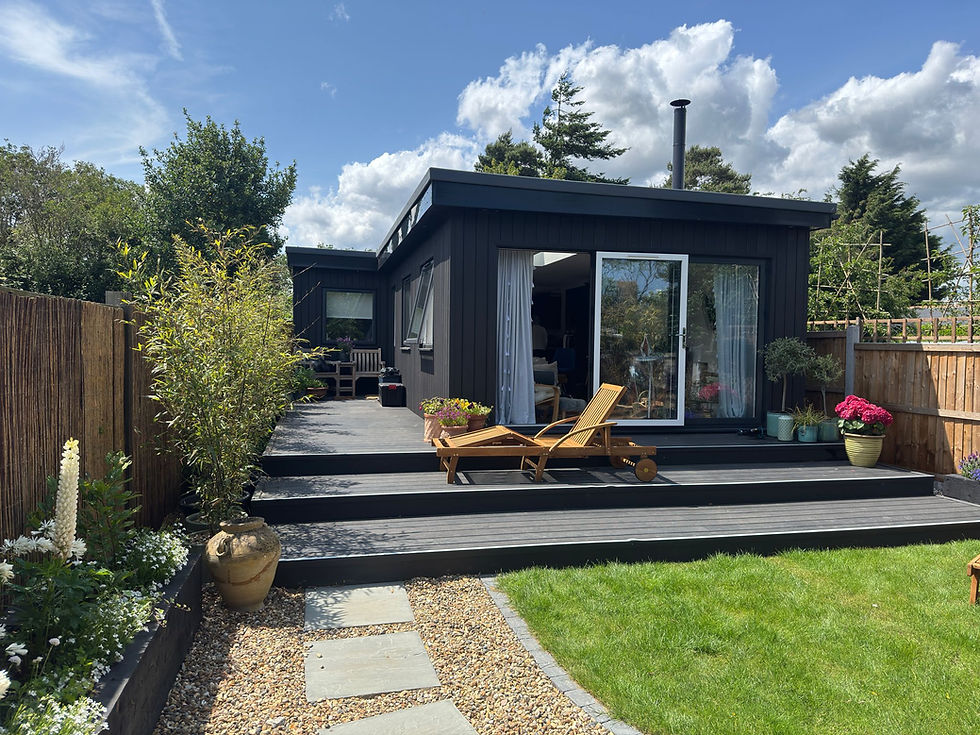
Wood burners or log burners are a great addition to a timber annexe, whether it's traditional or modern, and they are highly efficient. They heat up quickly, maintain warmth, and are carbon-neutral if you use a sustainable local fuel source. It's important to have them installed by a HETAS engineer for your safety. While the price of the stove unit might seem appealing, remember to factor in the costs of the flue and installation, which can significantly increase the total expense.
Underfloor heating can serve as an effective secondary heat source. It saves wall space and provides a warming sensation under your feet, but it might not be efficient or cost-effective as the primary heat source. In most garden annexes, electric underfloor heating utilizes a mesh element that is cut to size and installed beneath the floor. However, it is more costly to install than electric heaters, restricts the selection of floor coverings, and any maintenance issues will require you to lift the flooring. Together, these options offer a comfortable, efficient, and practical heating solution for your garden annexe when properly designed and installed, but may be on the more expensive side of heating options.
Air Conditioning and Bottles Gas
Air conditioning can both heat and cool the air, helping to maintain a consistent temperature and humidity level. It is a suitable option for garden annexes exposed to full sunlight throughout the day. The latest air conditioning models do not need external or unattractive refrigeration units, which can cause noise issues for you and your neighbors. These units are low noise, slimline, mounted internally, and are relatively inexpensive to operate.
Bottled gas run on propane and are a good idea for annexe that have limited mains electricity. They are a practical choice if you use bottled gas in your home and you can add an extra one or two to a delivery, otherwise the time and cost of obtaining gas bottles needs to be factored in. Gas bottles can be installed outside the annexe to feed a fixed gas heater, or there are freestanding heaters which enclose a small gas bottle. These tend to be bulky and short on aesthetic appeal. More importantly, they need adequate ventilation to prevent the build up of water vapour or any risk of toxic fumes.
What to Consider when Designing your Annexe
Its important to limit the heating and cooling you need, for your Annexe. South facing windows and heat-retaining dark floor tiles will collect passive solar heat, while overhanging eaves will allow your garden room to collect low sun in winter but shade it from high sun in summer. In a quality garden annexe, good floor and roof insulation is a must, as is high quality double glazing and draught proofing for doors and windows. The "best" heating option depends on the space size, efficiency, safety and your budget. Often the most cost-effective solution isn't the cheapest one to install, its the one that uses less energy over time.
Feel free to reach out to us at Mobile Annexe with any enquiries you may have and get started with building your dream Garden Annexe for 2026.


Comments